EUTIERRIA
Annelie Stokke Grimwade (SE/DK)
24 September – 31 October 2026
Preview opening on Thursday, 24 September kl. 16.00-20.00
Moussa Mchangama, author and cofounder of the consultancy firm In Futurum, gives the opening address at 17.00. Afterwards, Annelie Stokke Grimwade and the performing artist Madeleine Kate McGowan perform the vocal piece Planting Songs – Nettles created by McGowan with a composition by Paulina Miu.
It all begins with a story. One morning 30,000 years ago – or maybe just 30 days ago – humanity wakes up with a common memory of the origins of life. This memory marks the beginning of a common planetary movement: away from extraction and categorization, towards a life in symbiosis with the living world.
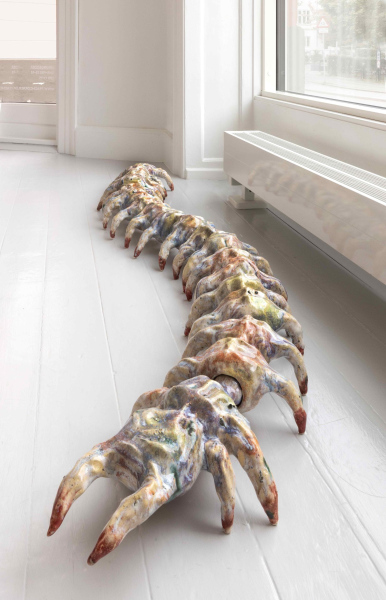
The title, Eutierria, is borrowed from Glenn Albrecht’s term for a sense of oneness with the Earth. In the exhibition, this recovered memory alters people’s understanding of their place in the world and enables a different type of society, where value is no longer primarily measured on economic growth but on biodiversity, healthy soil, regeneration and the well-being of different species. Woodlice and other insects become new cultural symbols of wealth and inter-species alliances that remind us of the complex web of life we ourselves are part of.
In essence, Eutierria asks a simple question: what other sorts of knowledge, appreciation and belonging will become possible if we understand ourselves as a part of the living world?
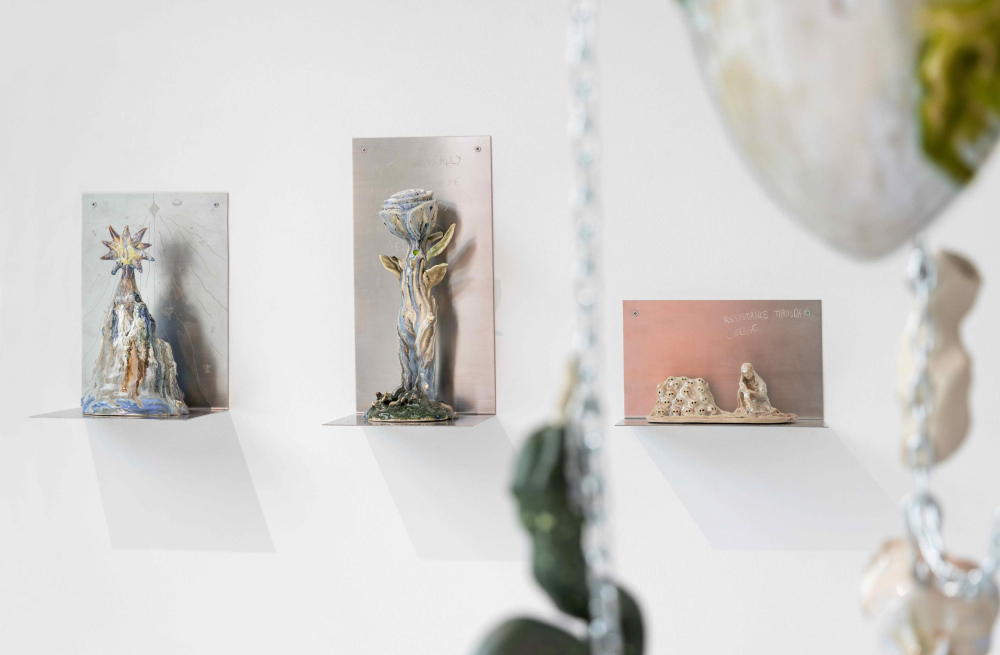
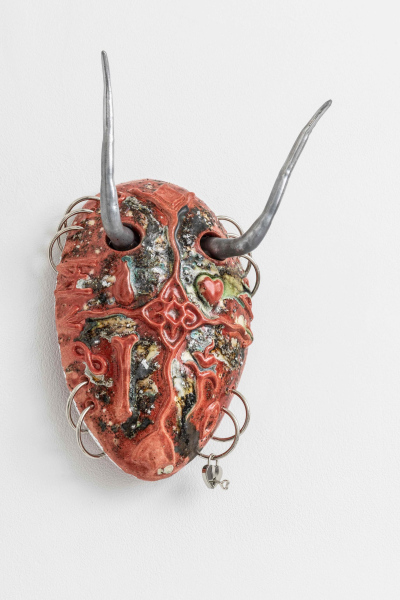
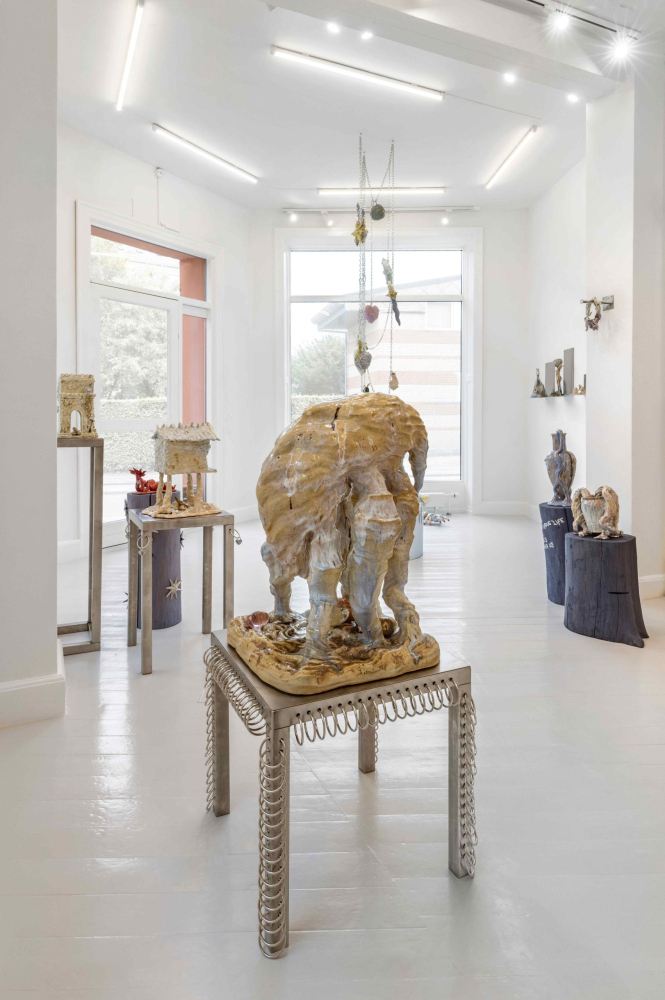
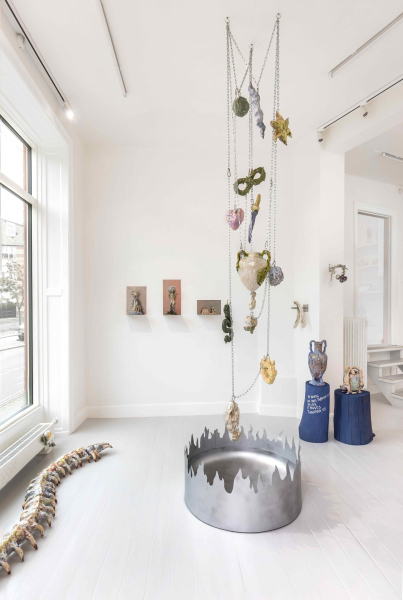
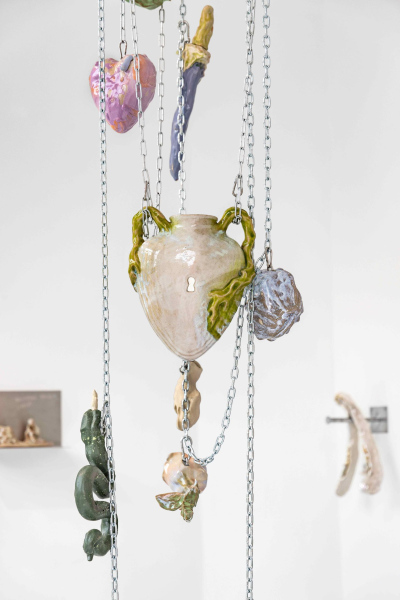
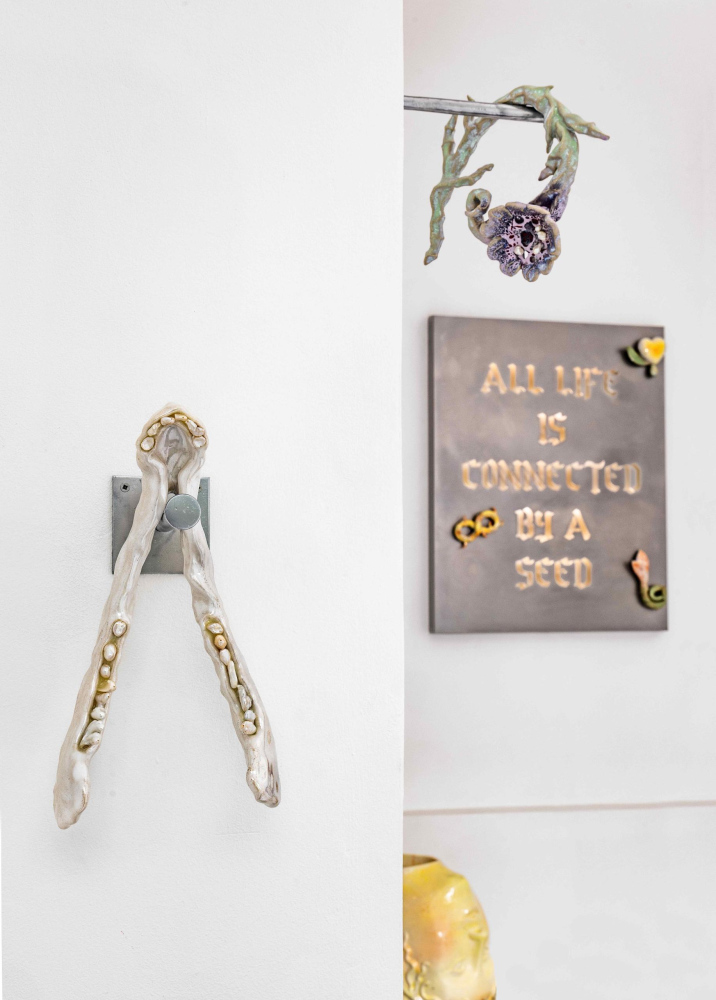
The exhibition takes the form of a speculative museum. Filled with ceramic artefacts created with by-products from the modern, man-made world – ashes, broken glass, electronic cables, dust and urban sediments, collected on various locations around Copenhagen. Through sculpting and material experiments, the exhibition visualizes how human society can go from taking from the living world to giving back to it and what sorts of objects would emerge in that process. Are the exhibits remnants from an imagined, all-encompassing transformation? Or are they part of a process that has already begun?
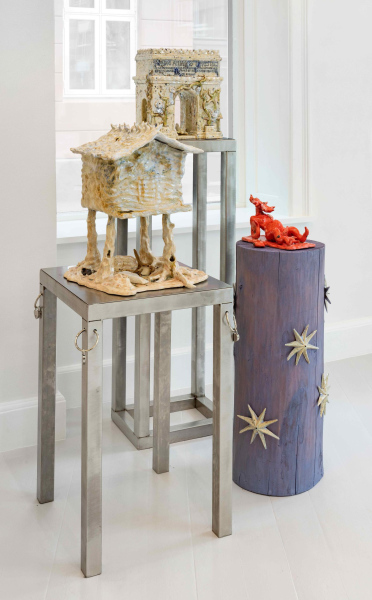
Historical objects, monuments and familiar symbols are reinterpreted through the lens of the exhibition’s futuristic narrative and are given new meanings centred on concern for the more-than-human world. For example, the Arc de Triomphe in Paris becomes De Jordiske Alliancers Bue (The Arc of the Earthly Alliances) – no longer an imperial monument to military conquest but architecture created to provide habitats for bees and plants.
The project is informed by Sámi relational understandings of humans, land and other living beings as mutually connected. Animistic thinking and spirituality are brought into dialogue with Western forms of knowledge through sculpture, visual storytelling, song, text and rituals. Thus, the artworks are not just objects that we can observe but engage in conversations about how we wish to live – with each other and with the Earth.